'%3e%3cuse%20fill='%23fff'%20xlink:href='%23a'/%3e%3c/g%3e%3c/svg%3e) North of Dijon, Côte-d'Or, Burgundy
North of Dijon, Côte-d'Or, Burgundy'%3e%3cuse%20fill='%23fff'%20xlink:href='%23a'/%3e%3c/g%3e%3cg%20transform='translate(-1356%20-18)'%3e%3cuse%20fill='%2323272a'%20xlink:href='%23b'/%3e%3c/g%3e%3c/svg%3e)



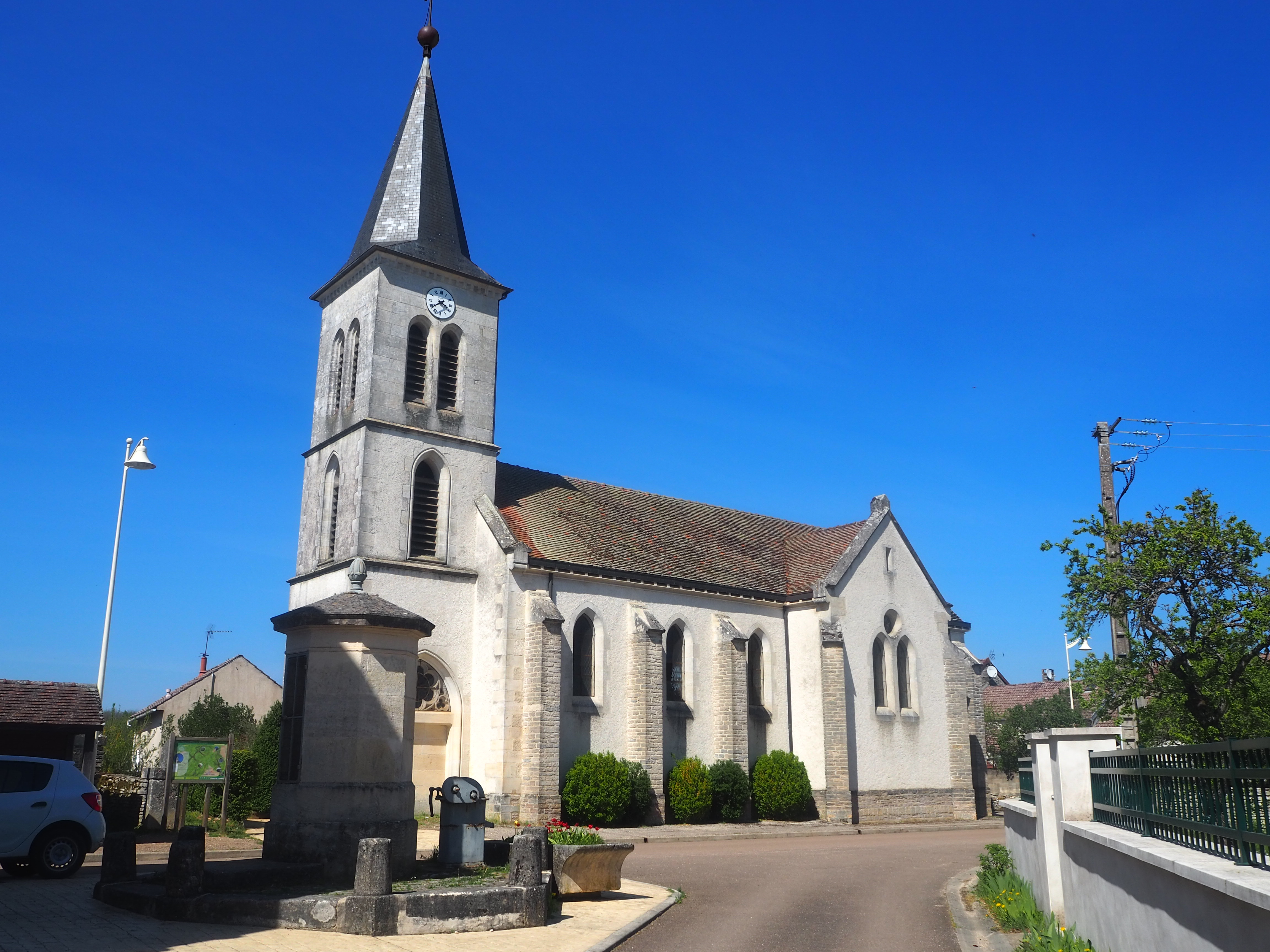
Église de Poiseul-lès-Saulx
En quelques mots
This church, which today has a neo-Gothic style, was gradually built on the site of an older church:
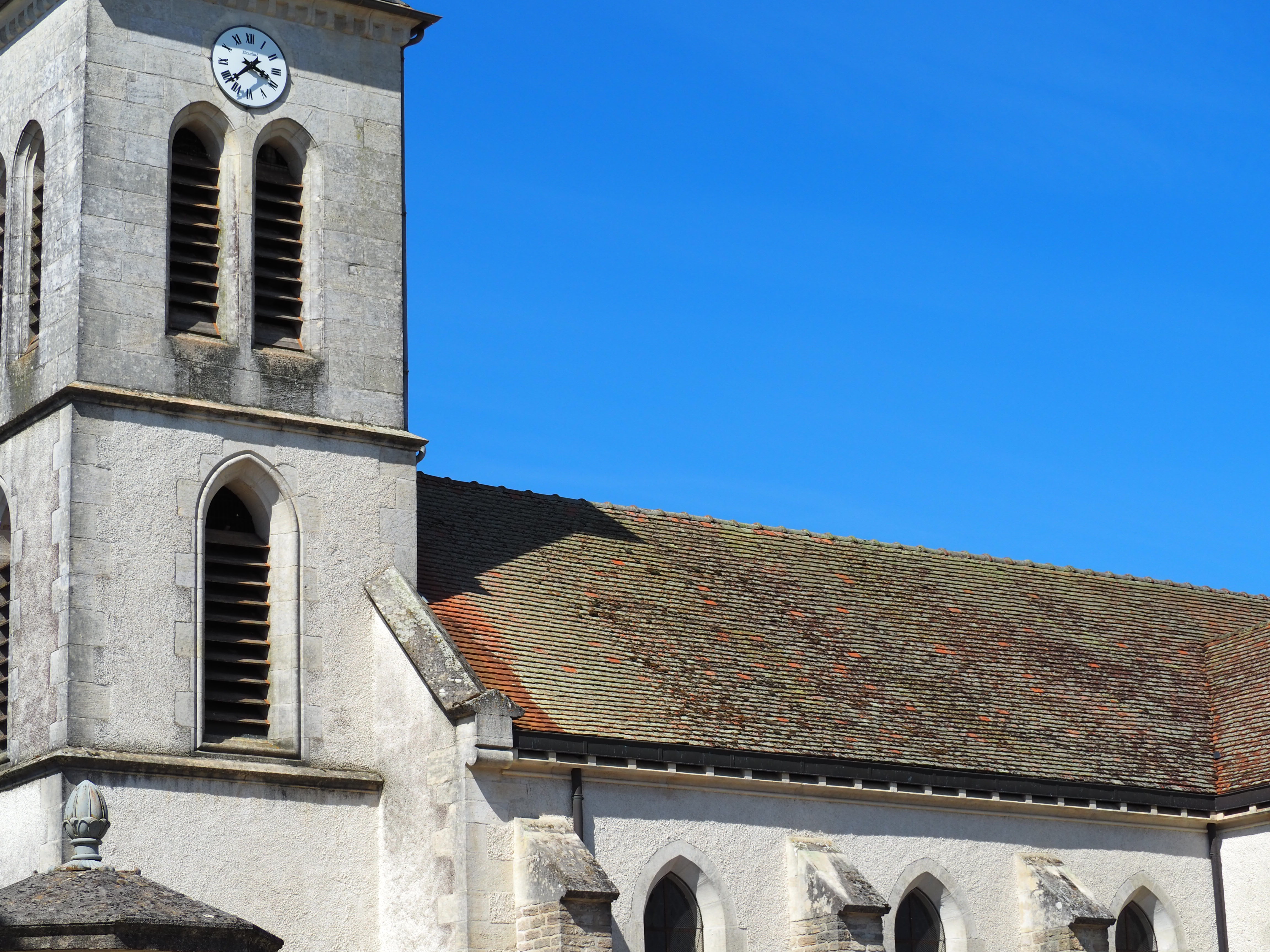
- from 1839 to 1841, the bell tower was built,
- The nave, choir and sacristy were added between 1864 and 1867.
These 2 stages reflect a more distant past, as there were 2 buildings, from different periods, adjoining each other.
In all documents from the 18th and 19th centuries, the following terms are used:
-the church, the very old part consisting of the nave and choir
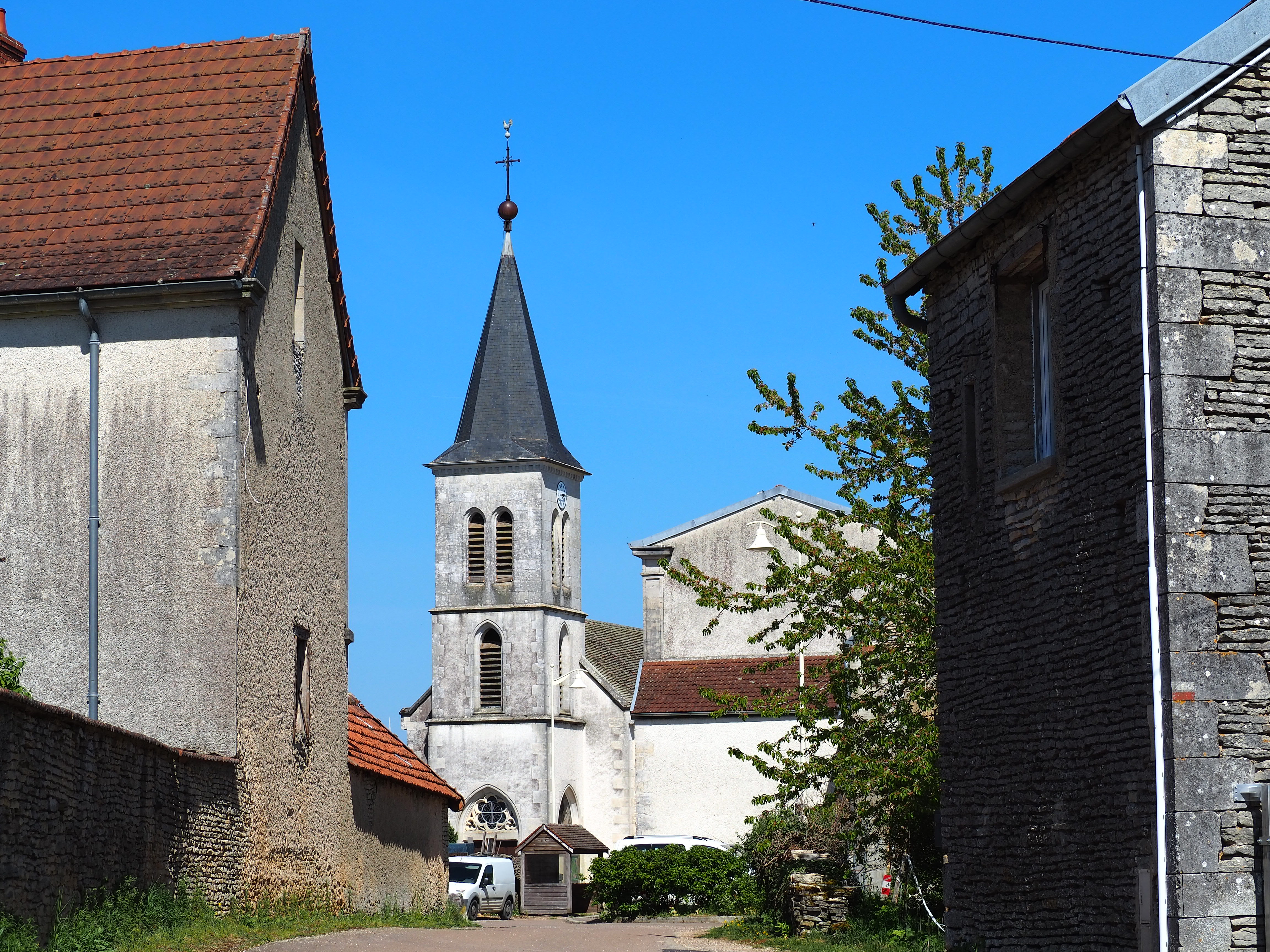
- the bell tower, the more recent part added in front of the gable of the portal in the 18th century.
The original, very old church, of Romanesque or pre-Romanesque tradition, existed as early as 1197.
The size of this ancient church is out of all proportion to the population of the time. For example, it is twice the size of the church in Moloy, which had the same number of inhabitants at the time.
There are several theories to explain this, but none has been proven. It could be due to the boom in the pilgrimage to Santiago de Compostela, for which a "pilgrim's guide" was written around 1130.
What is certain is that it was fortunate for the village to have such a large building, because when the population grew significantly (between 1750 and 1850), there was no need to remodel it. All that was done was to make it more practical by adding a sacristy, and to modernise it by adding a real bell tower over the entrance porch.
While the church has retained some older furnishings, most of the stone and wood carvings date from the 19th century (by the Burgundian sculptor Jules Schanoski).
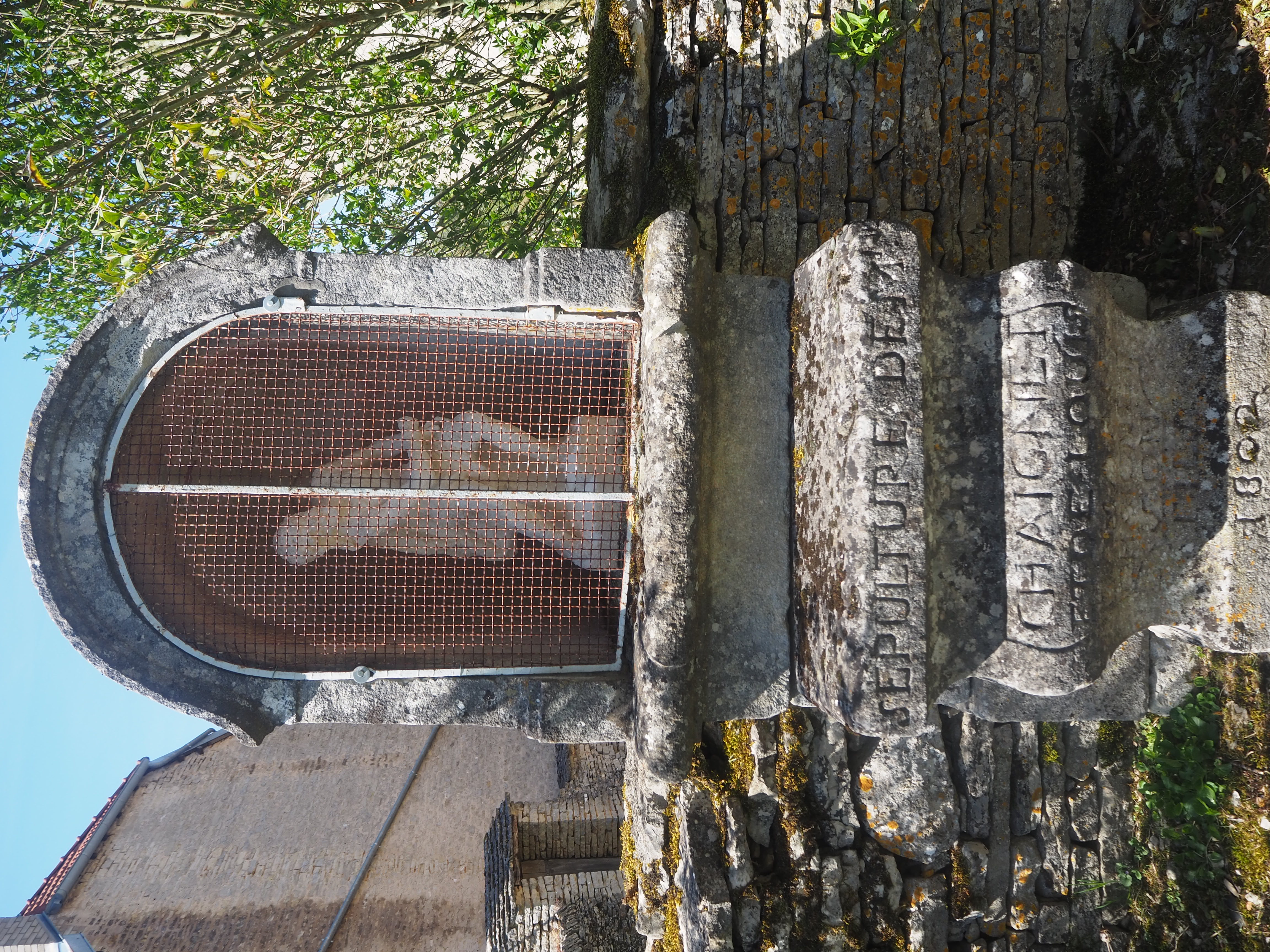
To the left of the entrance porch, outside the church, is an oratory dedicated to the God of Pity. It was built in 1787 at the request of Marie Nicolas Amable Chaignet, a prominent villager. The ceiling of the niche is decorated with a large scallop shell, a reference to the Pilgrim's Way to Santiago de Compostela, which passes through the village.
- from 1839 to 1841, the bell tower was built,
- The nave, choir and sacristy were added between 1864 and 1867.
These 2 stages reflect a more distant past, as there were 2 buildings, from different periods, adjoining each other.
In all documents from the 18th and 19th centuries, the following terms are used:
-the church, the very old part consisting of the nave and choir
- the bell tower, the more recent part added in front of the gable of the portal in the 18th century.
The original, very old church, of Romanesque or pre-Romanesque tradition, existed as early as 1197.
The size of this ancient church is out of all proportion to the population of the time. For example, it is twice the size of the church in Moloy, which had the same number of inhabitants at the time.
There are several theories to explain this, but none has been proven. It could be due to the boom in the pilgrimage to Santiago de Compostela, for which a "pilgrim's guide" was written around 1130.
What is certain is that it was fortunate for the village to have such a large building, because when the population grew significantly (between 1750 and 1850), there was no need to remodel it. All that was done was to make it more practical by adding a sacristy, and to modernise it by adding a real bell tower over the entrance porch.
While the church has retained some older furnishings, most of the stone and wood carvings date from the 19th century (by the Burgundian sculptor Jules Schanoski).
To the left of the entrance porch, outside the church, is an oratory dedicated to the God of Pity. It was built in 1787 at the request of Marie Nicolas Amable Chaignet, a prominent villager. The ceiling of the niche is decorated with a large scallop shell, a reference to the Pilgrim's Way to Santiago de Compostela, which passes through the village.
 Contact details
21120 POISEUL-LES-SAULX
En images

'%20fill='%23FFFFFF'%3e%3cg%20id='pagination'%20transform='translate(449.000000,%202475.000000)'%3e%3cg%20id='suivant'%20transform='translate(482.000000,%200.000000)'%3e%3cpath%20d='M25.9927007,36.3068182%20L31.7408759,41.9886364%20C32.0693447,42.3295472%2032.4890485,42.5%2033,42.5%20C33.4744549,42.5%2033.8759108,42.3295472%2034.2043796,41.9886364%20L40.0072993,36.3068182%20C40.3357681,35.9659074%2040.5,35.5587145%2040.5,35.0852273%20C40.5,34.6117401%2040.3357681,34.2045472%2040.0072993,33.8636364%20C39.6788305,33.5227256%2039.2591266,33.3522727%2038.7481752,33.3522727%20C38.2372237,33.3522727%2037.8175199,33.5227256%2037.4890511,33.8636364%20L34.7518248,36.5909091%20L34.7518248,24.2613636%20C34.7518248,23.7689369%2034.5784689,23.3522744%2034.2317518,23.0113636%20C33.8850348,22.6704528%2033.4744549,22.5%2033,22.5%20C32.5255451,22.5%2032.1149652,22.6704528%2031.7682482,23.0113636%20C31.4215311,23.3522744%2031.2481752,23.7689369%2031.2481752,24.2613636%20L31.2481752,36.5909091%20L28.5109489,33.8636364%20C28.1824801,33.5227256%2027.7627763,33.3522727%2027.2518248,33.3522727%20C26.7408734,33.3522727%2026.3211695,33.5227256%2025.9927007,33.8636364%20C25.6642319,34.2045472%2025.5,34.6117401%2025.5,35.0852273%20C25.5,35.5587145%2025.6642319,35.9659074%2025.9927007,36.3068182%20Z'%20id=''%3e%3c/path%3e%3c/g%3e%3c/g%3e%3c/g%3e%3c/g%3e%3c/svg%3e)