'%3e%3cuse%20fill='%23fff'%20xlink:href='%23a'/%3e%3c/g%3e%3c/svg%3e) North of Dijon, Côte-d'Or, Burgundy
North of Dijon, Côte-d'Or, Burgundy'%3e%3cuse%20fill='%23fff'%20xlink:href='%23a'/%3e%3c/g%3e%3cg%20transform='translate(-1356%20-18)'%3e%3cuse%20fill='%2323272a'%20xlink:href='%23b'/%3e%3c/g%3e%3c/svg%3e)



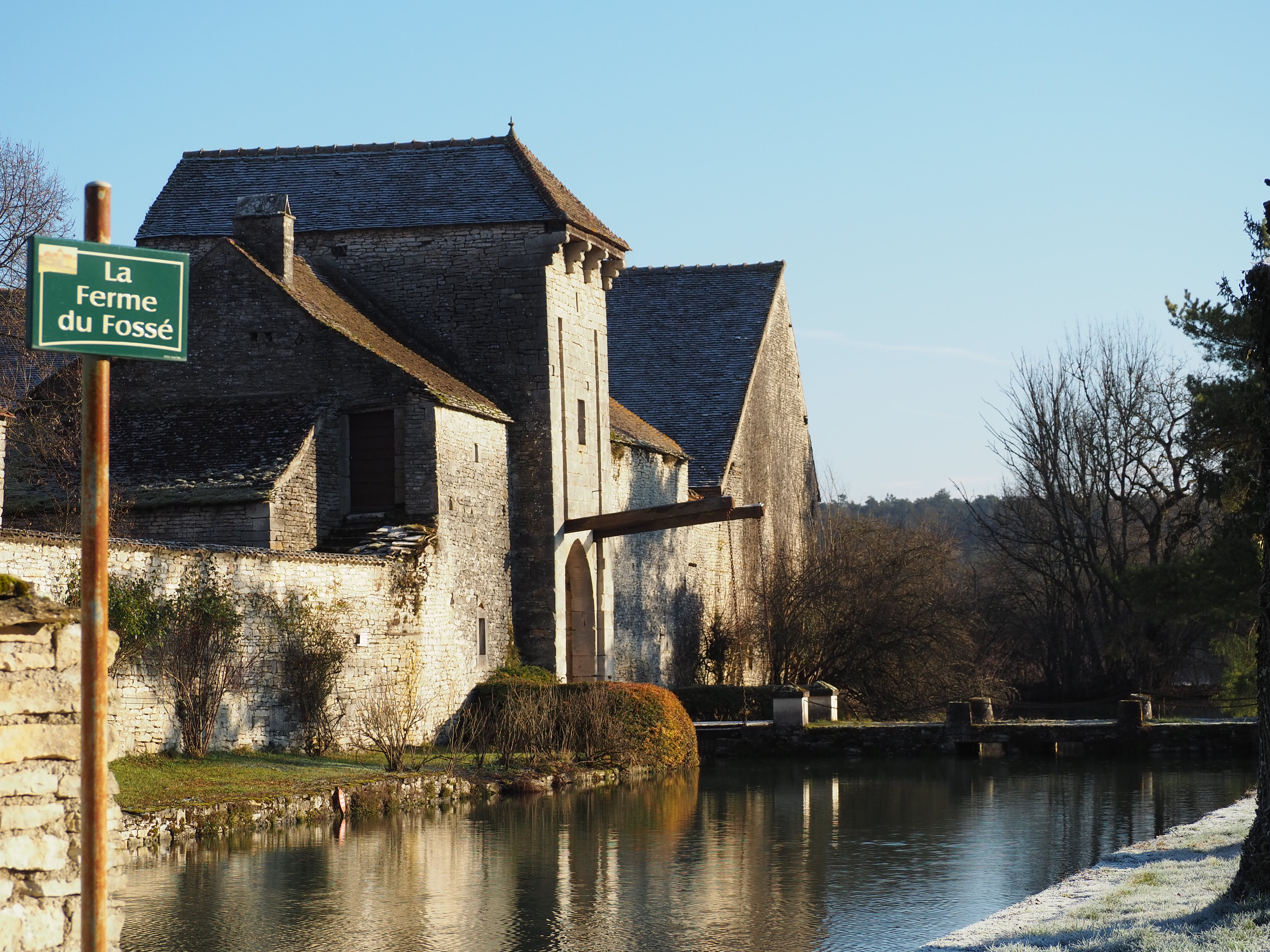
Ferme forte du Fossé
En quelques mots
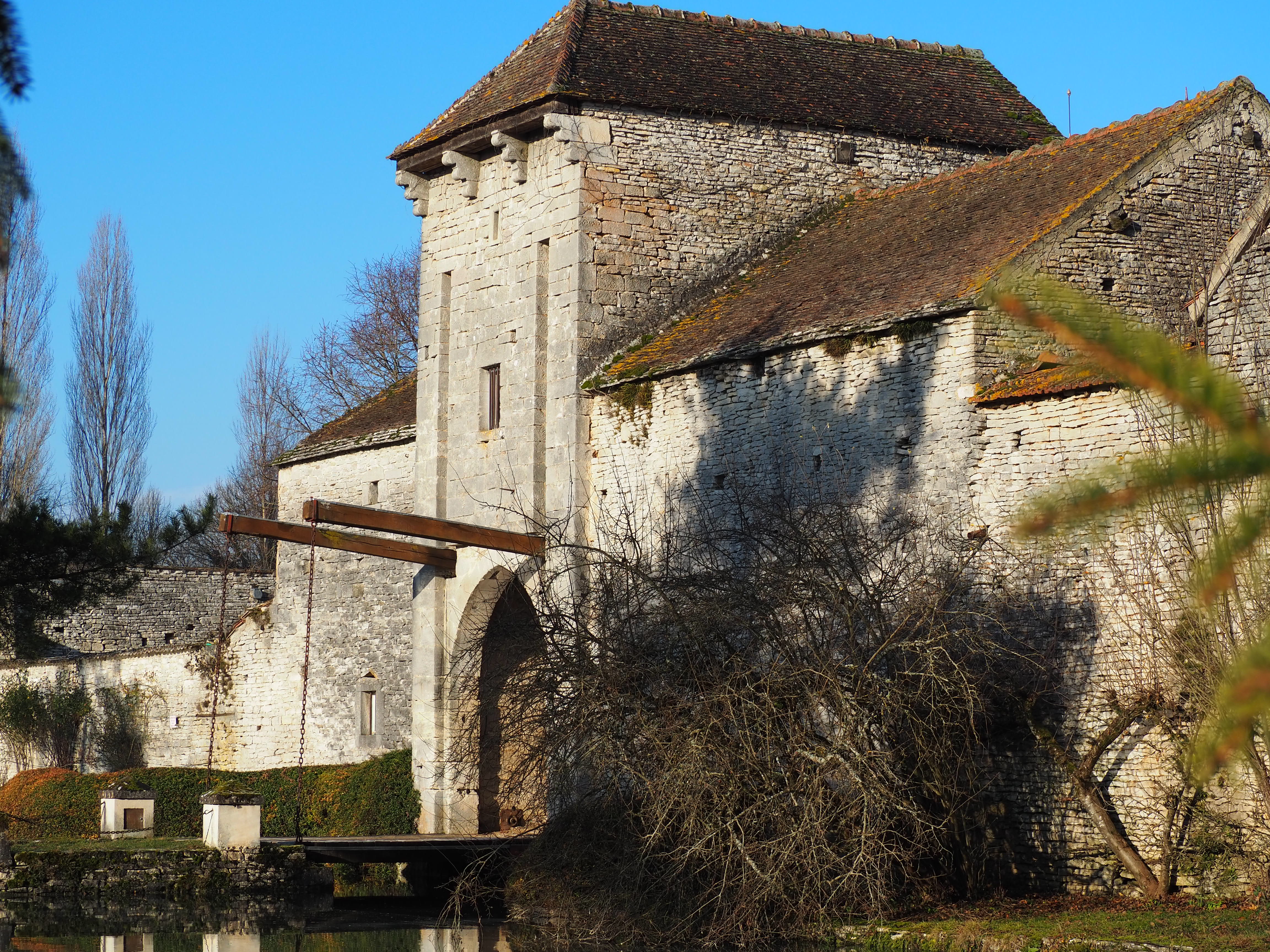
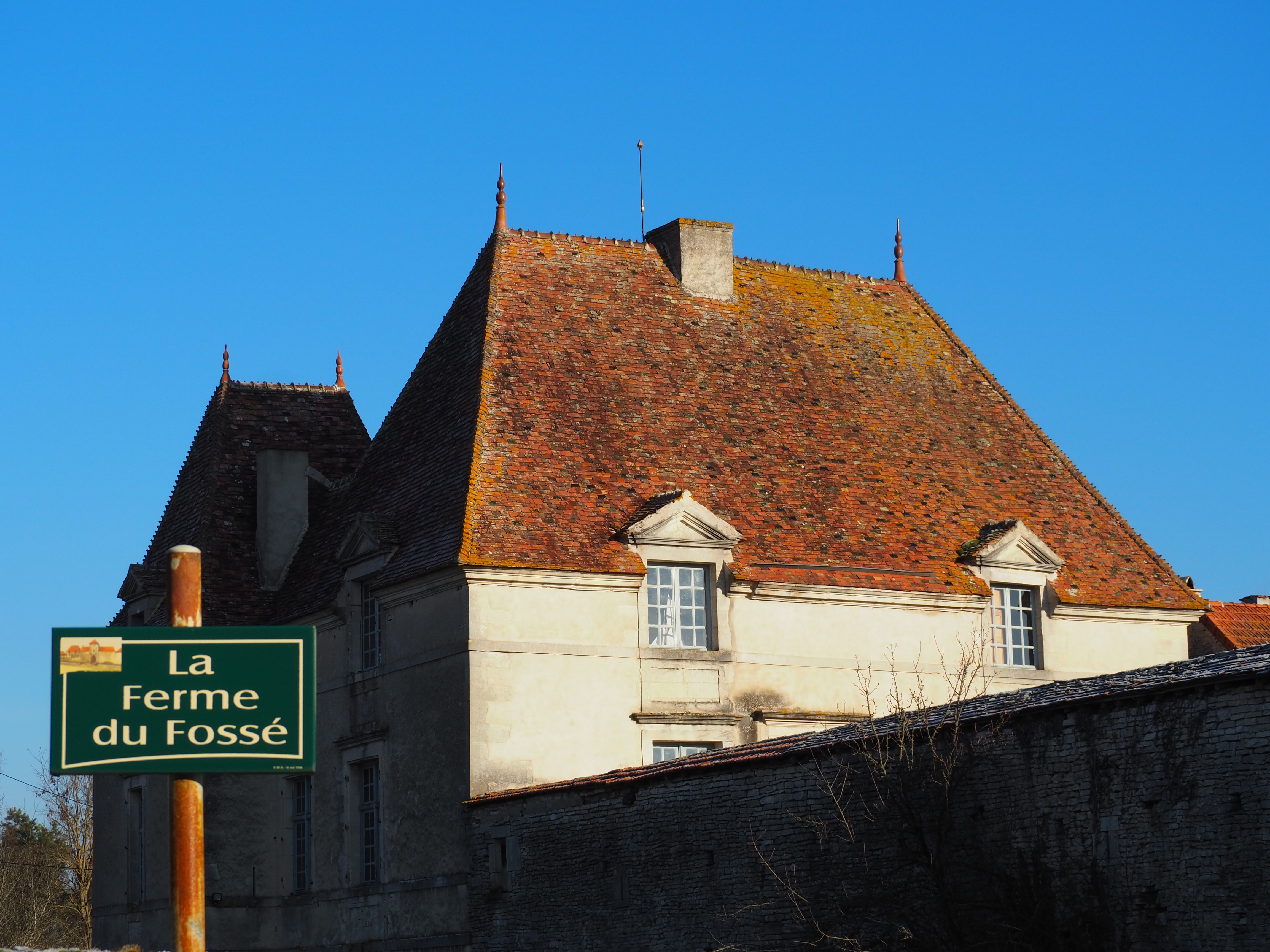
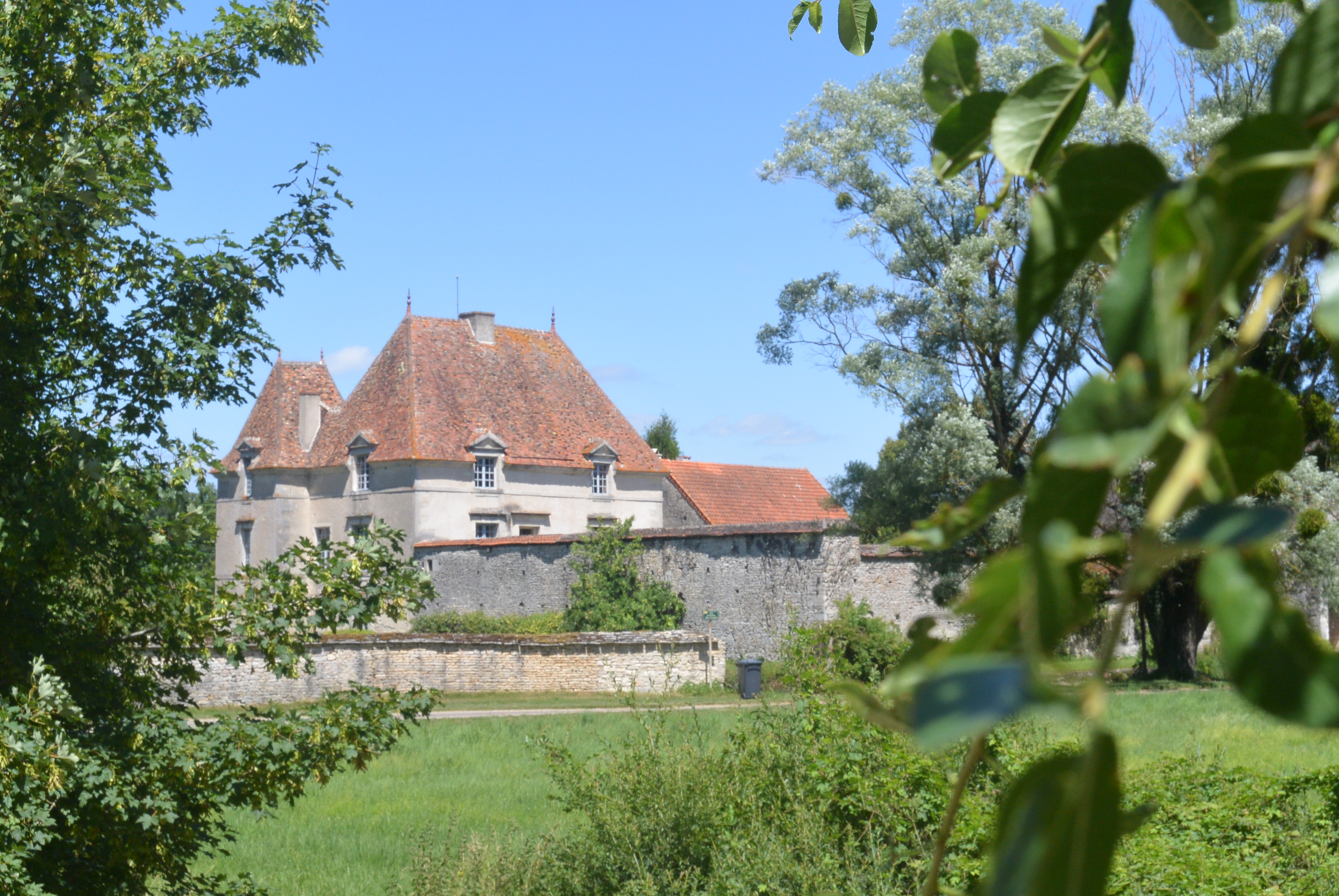
Le Fossé is a lowland stronghold situated in the heart of a wetland area. It consists of a group of buildings surrounded by moats. You enter through a 15th-century gateway. Inside the courtyard, surrounded by a wall pierced with loopholes, stands a typical Renaissance dwelling. The whole complex is a listed building.
The ground floor of the main building contains a small two-bay vaulted oratory and a kitchen with a basket-handle vault resting on a central pillar. The buildings are mentioned for the first time in Bèze's chronicle. A major change in the appearance of the buildings occurred during the Wars of Religion. In 1591, Pierre d'Anglure, Lord of Guyonvelle and a member of the League, laid siege to and ruined this "pernicious and dangerous" house because of its proximity to the Dijon/Langres road.
During the Revolution, the property was bought as national property by Charles François Dupuis, a member of the Convention and author of L'Origine de tous les Cultes. He had been in great danger under the Terror and Le Fossé was a refuge for him. He chaired the National Assembly at the time of the Concordat. He died in Le Fossé in 1809. His tomb, listed as a historic monument, is in the Echevannes cemetery.
The ground floor of the main building contains a small two-bay vaulted oratory and a kitchen with a basket-handle vault resting on a central pillar. The buildings are mentioned for the first time in Bèze's chronicle. A major change in the appearance of the buildings occurred during the Wars of Religion. In 1591, Pierre d'Anglure, Lord of Guyonvelle and a member of the League, laid siege to and ruined this "pernicious and dangerous" house because of its proximity to the Dijon/Langres road.
During the Revolution, the property was bought as national property by Charles François Dupuis, a member of the Convention and author of L'Origine de tous les Cultes. He had been in great danger under the Terror and Le Fossé was a refuge for him. He chaired the National Assembly at the time of the Concordat. He died in Le Fossé in 1809. His tomb, listed as a historic monument, is in the Echevannes cemetery.
 Contact details
Le Fossé
21120 ECHEVANNES
Telephone : 03 80 95 24 03
 Spoken languages
French, English
En images

'%20fill='%23FFFFFF'%3e%3cg%20id='pagination'%20transform='translate(449.000000,%202475.000000)'%3e%3cg%20id='suivant'%20transform='translate(482.000000,%200.000000)'%3e%3cpath%20d='M25.9927007,36.3068182%20L31.7408759,41.9886364%20C32.0693447,42.3295472%2032.4890485,42.5%2033,42.5%20C33.4744549,42.5%2033.8759108,42.3295472%2034.2043796,41.9886364%20L40.0072993,36.3068182%20C40.3357681,35.9659074%2040.5,35.5587145%2040.5,35.0852273%20C40.5,34.6117401%2040.3357681,34.2045472%2040.0072993,33.8636364%20C39.6788305,33.5227256%2039.2591266,33.3522727%2038.7481752,33.3522727%20C38.2372237,33.3522727%2037.8175199,33.5227256%2037.4890511,33.8636364%20L34.7518248,36.5909091%20L34.7518248,24.2613636%20C34.7518248,23.7689369%2034.5784689,23.3522744%2034.2317518,23.0113636%20C33.8850348,22.6704528%2033.4744549,22.5%2033,22.5%20C32.5255451,22.5%2032.1149652,22.6704528%2031.7682482,23.0113636%20C31.4215311,23.3522744%2031.2481752,23.7689369%2031.2481752,24.2613636%20L31.2481752,36.5909091%20L28.5109489,33.8636364%20C28.1824801,33.5227256%2027.7627763,33.3522727%2027.2518248,33.3522727%20C26.7408734,33.3522727%2026.3211695,33.5227256%2025.9927007,33.8636364%20C25.6642319,34.2045472%2025.5,34.6117401%2025.5,35.0852273%20C25.5,35.5587145%2025.6642319,35.9659074%2025.9927007,36.3068182%20Z'%20id=''%3e%3c/path%3e%3c/g%3e%3c/g%3e%3c/g%3e%3c/g%3e%3c/svg%3e)