'%3e%3cuse%20fill='%23fff'%20xlink:href='%23a'/%3e%3c/g%3e%3c/svg%3e) North of Dijon, Côte-d'Or, Burgundy
North of Dijon, Côte-d'Or, Burgundy'%3e%3cuse%20fill='%23fff'%20xlink:href='%23a'/%3e%3c/g%3e%3cg%20transform='translate(-1356%20-18)'%3e%3cuse%20fill='%2323272a'%20xlink:href='%23b'/%3e%3c/g%3e%3c/svg%3e)



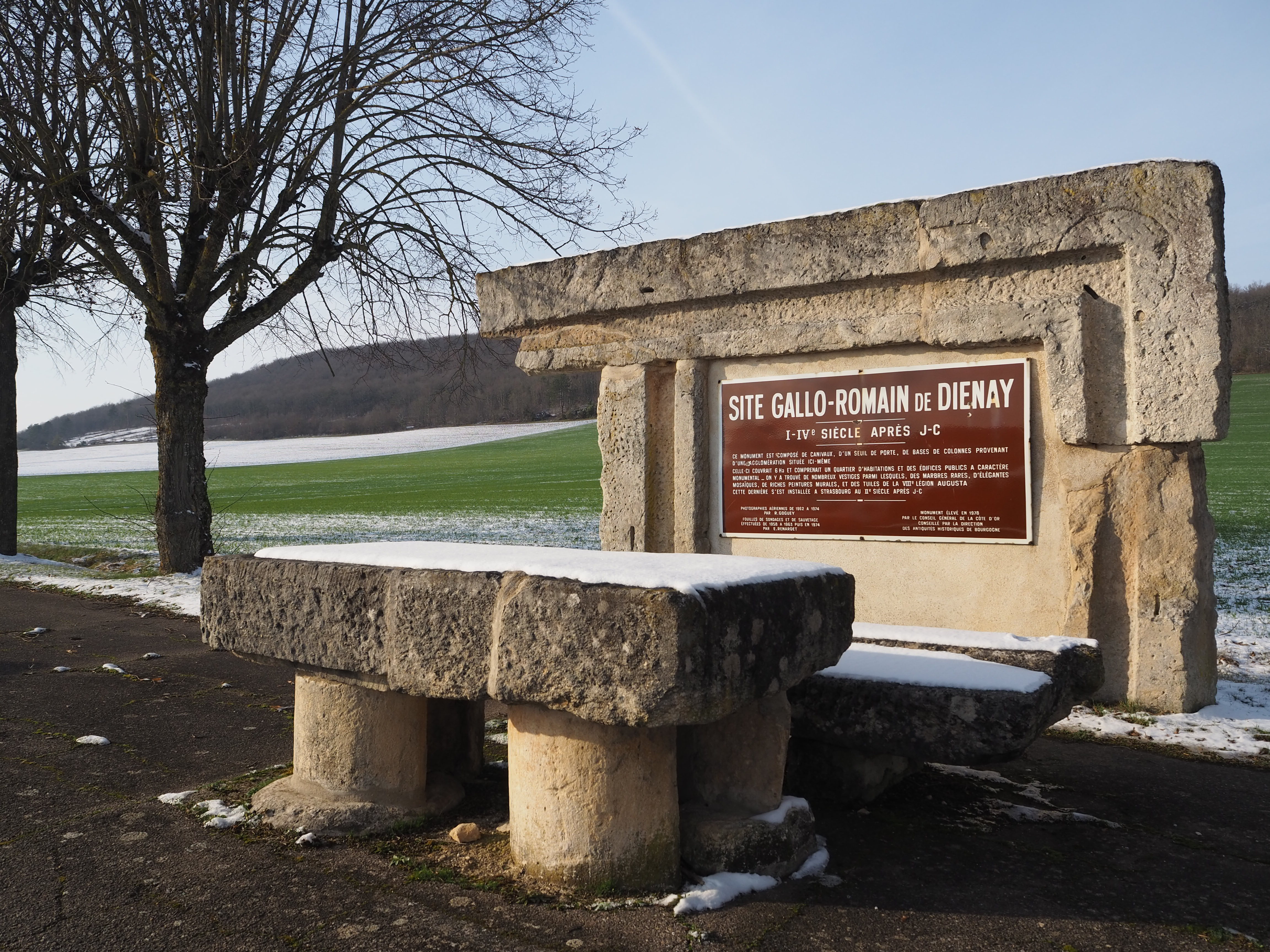
Villa gallo-romaine de Diénay
En quelques mots
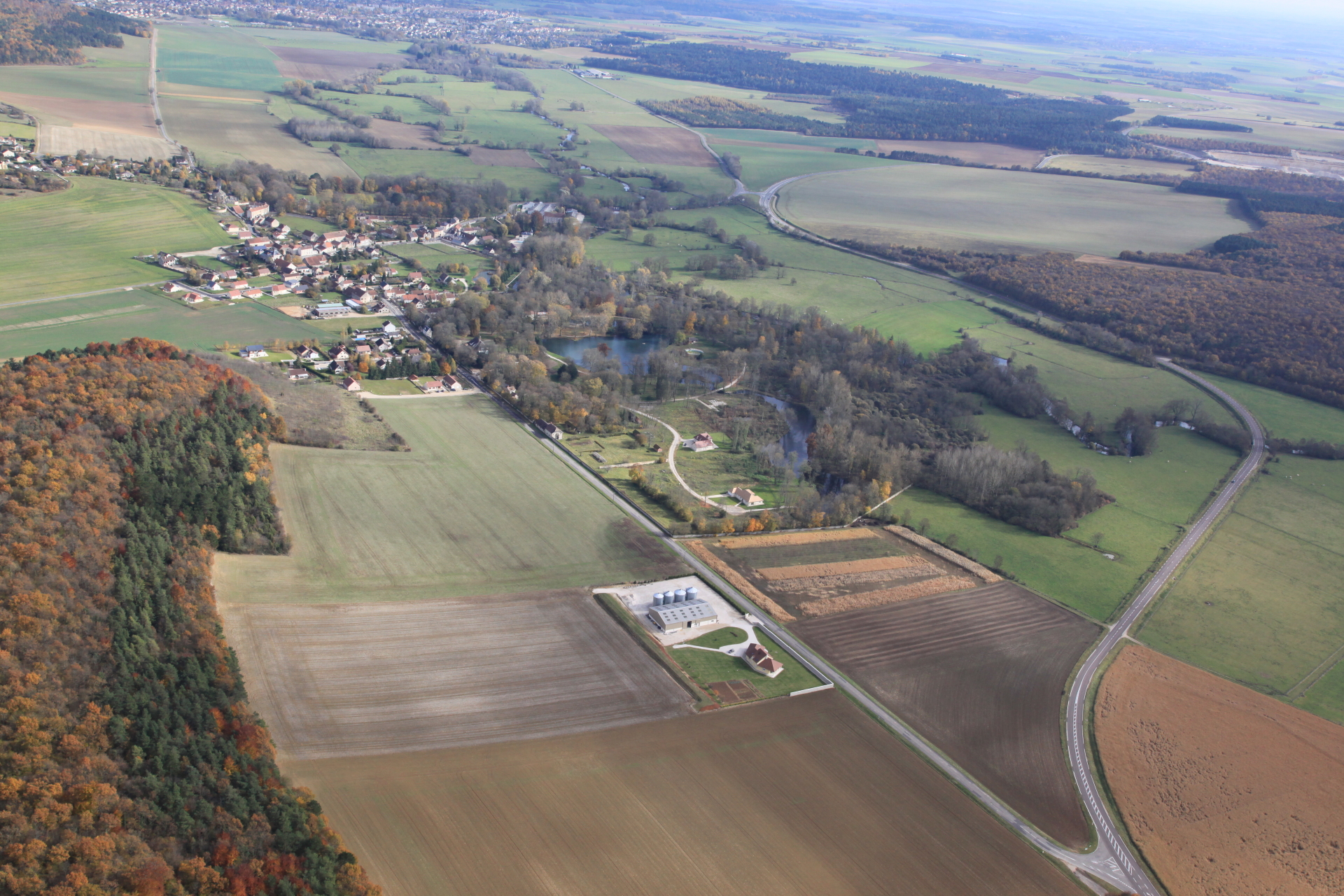
While ploughing their fields, farmers discovered archaeological remains. Aerial photographs taken by René Goguey in 1962 revealed the layout of a large Gallo-Roman villa. In 1974, construction of a new road began without prior notice, passing right over the site of the villa and threatening to destroy the remains. Work was finally suspended so that rescue excavations could be carried out.
The various test pits and excavations uncovered a villa with a classical layout, comprising buildings arranged around a courtyard measuring around 40 m on each side, with a residential part (pars urbana) and a part reserved for agricultural work (pars rustica). Several rooms have been identified in the residential section, including baths. We can also assume that the large rooms were intended for the owners and other smaller rooms were utilitarian in nature or reserved for staff. The discovery of fragments of wall paintings and marble veneers, some of which come from Greece or Algeria, also suggests that the villa was richly decorated.
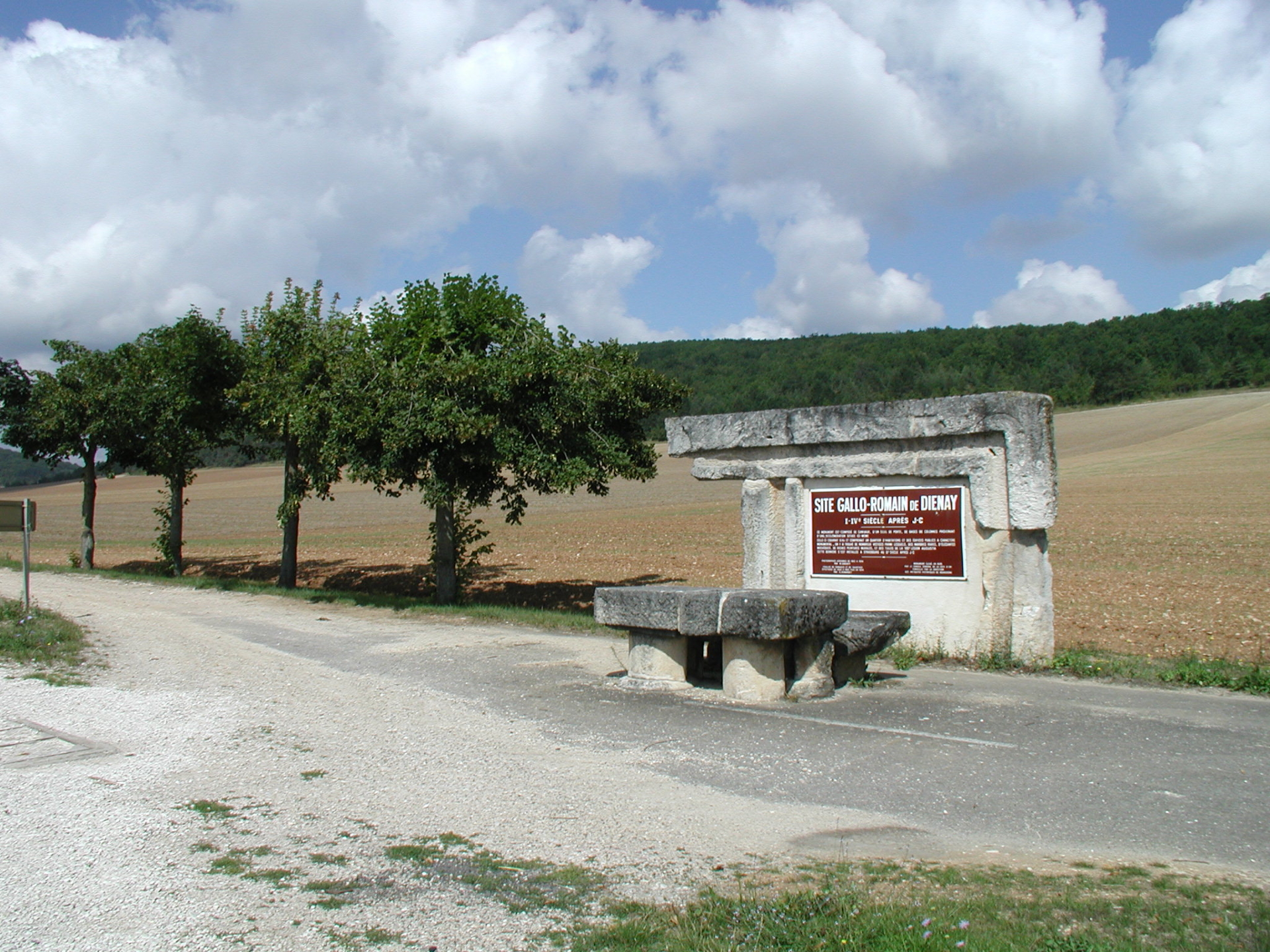
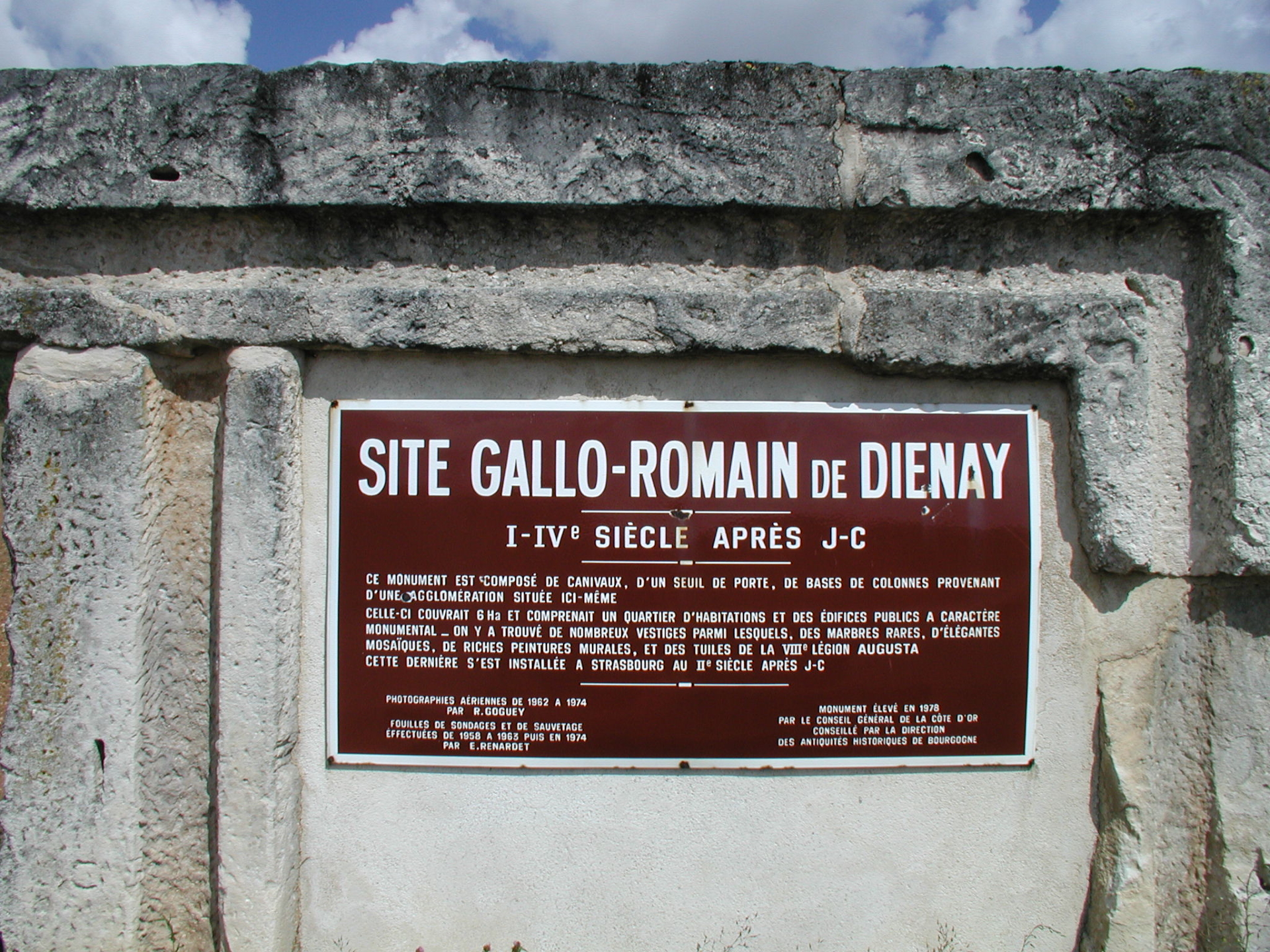
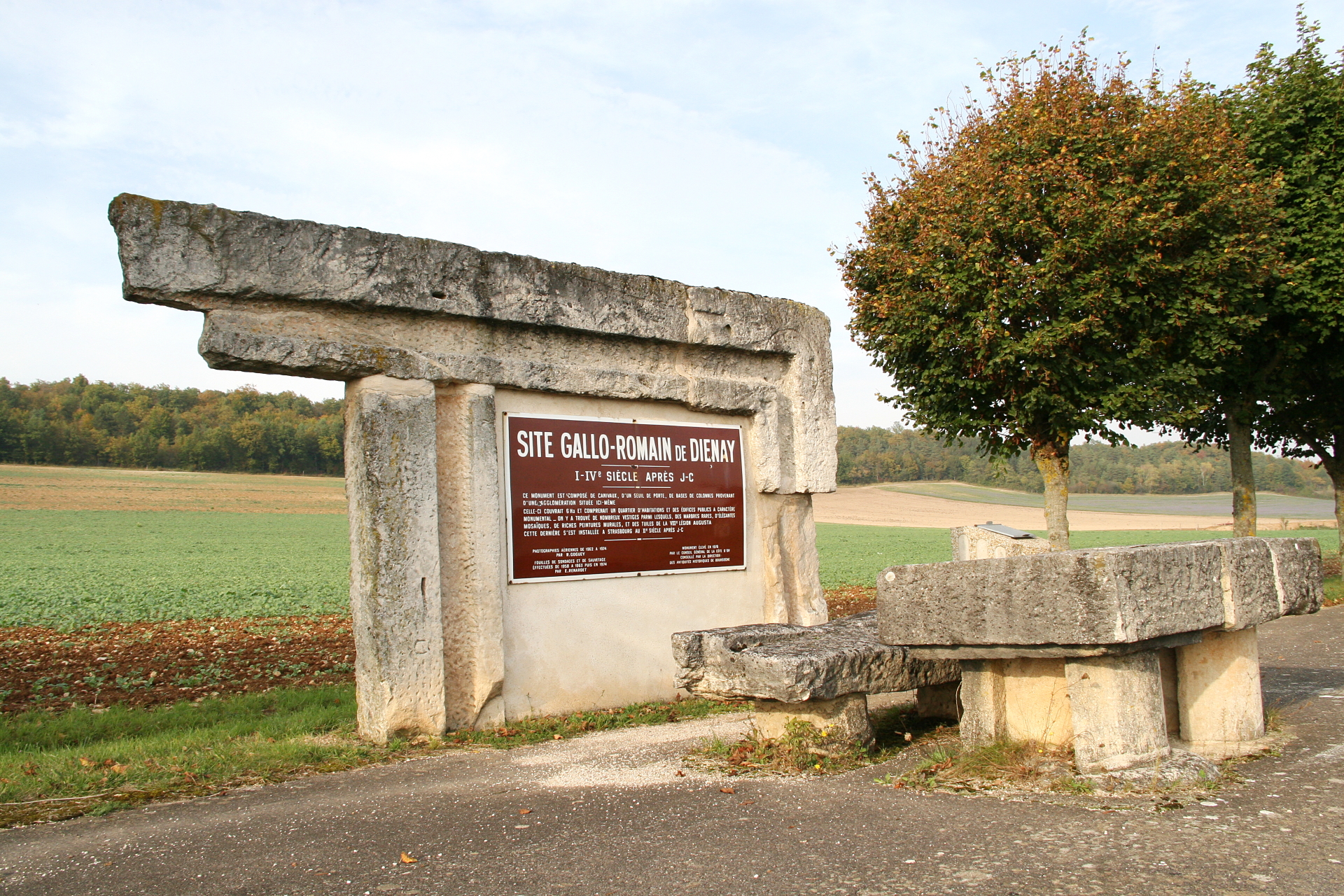
Today, traces of the villa are no longer visible, but in 1978 a monument was erected on its site, at the junction of the D6 and D901, using material excavated during the excavation.
For more information: https://www.dienay.fr/le-site-gallo-romain
The various test pits and excavations uncovered a villa with a classical layout, comprising buildings arranged around a courtyard measuring around 40 m on each side, with a residential part (pars urbana) and a part reserved for agricultural work (pars rustica). Several rooms have been identified in the residential section, including baths. We can also assume that the large rooms were intended for the owners and other smaller rooms were utilitarian in nature or reserved for staff. The discovery of fragments of wall paintings and marble veneers, some of which come from Greece or Algeria, also suggests that the villa was richly decorated.
Today, traces of the villa are no longer visible, but in 1978 a monument was erected on its site, at the junction of the D6 and D901, using material excavated during the excavation.
For more information: https://www.dienay.fr/le-site-gallo-romain
 Contact details
 Accessibility
Suitable for disabled persons
 Animals
Accepted
En images

'%20fill='%23FFFFFF'%3e%3cg%20id='pagination'%20transform='translate(449.000000,%202475.000000)'%3e%3cg%20id='suivant'%20transform='translate(482.000000,%200.000000)'%3e%3cpath%20d='M25.9927007,36.3068182%20L31.7408759,41.9886364%20C32.0693447,42.3295472%2032.4890485,42.5%2033,42.5%20C33.4744549,42.5%2033.8759108,42.3295472%2034.2043796,41.9886364%20L40.0072993,36.3068182%20C40.3357681,35.9659074%2040.5,35.5587145%2040.5,35.0852273%20C40.5,34.6117401%2040.3357681,34.2045472%2040.0072993,33.8636364%20C39.6788305,33.5227256%2039.2591266,33.3522727%2038.7481752,33.3522727%20C38.2372237,33.3522727%2037.8175199,33.5227256%2037.4890511,33.8636364%20L34.7518248,36.5909091%20L34.7518248,24.2613636%20C34.7518248,23.7689369%2034.5784689,23.3522744%2034.2317518,23.0113636%20C33.8850348,22.6704528%2033.4744549,22.5%2033,22.5%20C32.5255451,22.5%2032.1149652,22.6704528%2031.7682482,23.0113636%20C31.4215311,23.3522744%2031.2481752,23.7689369%2031.2481752,24.2613636%20L31.2481752,36.5909091%20L28.5109489,33.8636364%20C28.1824801,33.5227256%2027.7627763,33.3522727%2027.2518248,33.3522727%20C26.7408734,33.3522727%2026.3211695,33.5227256%2025.9927007,33.8636364%20C25.6642319,34.2045472%2025.5,34.6117401%2025.5,35.0852273%20C25.5,35.5587145%2025.6642319,35.9659074%2025.9927007,36.3068182%20Z'%20id=''%3e%3c/path%3e%3c/g%3e%3c/g%3e%3c/g%3e%3c/g%3e%3c/svg%3e)